How to help an ageing parent remember the important things
Tablets, appointments, bin day and bills. Practical ways to help a parent remember what matters, without taking over their life or calling all day.
On this page
It usually starts small. A missed tablet here, a forgotten appointment there, the bins left out on the wrong day. Your mum or dad is still perfectly capable, but there's more to keep track of than there used to be, and you're not always nearby to help.
The good news is that a few simple habits make a big difference. The best ones work with your parent's routine, keep them in charge, and let you know things are fine without phoning five times a day.
This guide covers what tends to work for medication, appointments and everyday jobs, how to talk about it without anyone feeling patronised, and the tools worth trying.
Start with a conversation, not a system
Nobody likes being managed, least of all by their children. Before you buy a gadget or set up a single reminder, talk to your parent about what they find tricky.
Some useful ways in:
- "I've noticed you've got a lot of appointments at the moment. Would it help if I kept track of them too?"
- "Are the new tablets easy to remember? Some people find the lunchtime ones the hardest."
- "Would you like a little nudge on bin day, or does that sound annoying?"
Let them pick what they want help with. They're far more likely to stick with something they chose. The NHS advice for carers makes the same point about medicines: the person you care for decides how involved you are, so start by asking what they're comfortable with (NHS: medicines tips for carers).
What makes a reminder actually work
Plenty of reminders get ignored. The ones that work tend to have three things in common.
They're tied to an existing habit. A reminder that arrives with breakfast, or just before a favourite radio programme, slots into the day. The NHS Specialist Pharmacy Service notes that people do better when reminders are linked to a regular daily activity rather than an arbitrary time (NHS SPS: reminding to take medicines).
They're personal. A message from a person they know feels different from a beep. The same NHS guidance found that personal, interactive reminders (texts and calls from people) tend to be more effective than generic alarms.
They close the loop. The most useful reminders let someone know the job is done. Otherwise you're left wondering, and you end up phoning to check, which is exactly the nagging everyone wants to avoid.
Medication: the most important thing to get right
Medicines are where a missed reminder matters most, so it's worth putting a little more thought in. These are the options families use most, often in combination.
A pill organiser
A box with compartments for each day and time. Easy to see at a glance whether today's dose has been taken. Ask the pharmacist first, as not every medicine is suitable.
A reminder chart
A simple printed chart of what to take and when. Many pharmacies can make one for you, sometimes free.
An alarm or talking clock
Useful for people who live by a routine. Choose carefully: sudden beeps can be stressful, and some people stop noticing them.
A message from family
A short reminder on the phone at the right time, ideally one they can answer with a single tap so you know it's done.
A few rules that apply whatever you choose:
- Talk to their pharmacist. They can suggest the right aids, check whether medicines can go in an organiser, and help simplify the timings. If they take several medicines, their GP surgery may offer a free structured medication review with a pharmacist, and it's worth going along if they'd like you there.
- Never double up. If a dose is missed, don't take two to catch up. Check the leaflet or ask the pharmacist (NHS).
- Keep repeat prescriptions ticking over. A reminder a week before tablets run out saves a lot of last-minute panic. Many GPs can send prescriptions straight to a pharmacy, and some pharmacies deliver.
- Never give medicine without consent. If your parent is refusing tablets, speak to their GP or pharmacist about why and what the alternatives are.
Appointments: know what's coming and who's going
Appointments are easier to forget than daily tablets because they're irregular. A few things help:
- Keep one shared list. A paper calendar on the fridge, a shared online calendar or a family group chat. One place, not three.
- Remind twice. Once the day before (to plan transport, find the letter, book time off if you're going too) and once an hour or two before.
- Agree who's going. If you have brothers or sisters, decide who attends which appointment so nobody assumes someone else has it covered.
- Write questions down beforehand. A short list of questions makes the appointment more useful, especially if you can't be there.
Everyday jobs: bins, bills and the boiler
It's often the small things that cause the most stress: missing the bin collection for a fortnight, a bill paid late, the boiler service that never got booked.
| Job | How often | A reminder that helps |
|---|---|---|
| Bins out | Weekly or fortnightly | The evening before collection |
| Repeat prescription | Monthly | A week before tablets run out |
| Big bills (council tax, energy) | Monthly | Two or three days before the due date |
| Boiler service | Yearly | A month before it's due, to book |
| Eye test and hearing check | Yearly or as advised | A month ahead, to book |
| Smoke alarm test | Monthly | First day of the month |
You don't need to remind them about everything. Pick the two or three jobs that cause problems when they're missed, and leave the rest.
Helping from a distance
Many people looking after a parent don't live nearby. That makes it harder to notice when something has slipped, and it makes the worry worse.
What helps most is knowing that things are fine without having to ask. If every check means a phone call, you'll either call constantly or not enough. A better setup:
- Reminders go to your parent directly, at times that suit their day.
- You only hear when something hasn't happened, so quiet days are good days.
- A regular call or visit stays a regular call or visit. Reminders are for the routine stuff, so your conversations can be about everything else.
Where I'm OK fits in
We built I'm OK for exactly this situation, so it's fair to explain how it works and where it doesn't fit.
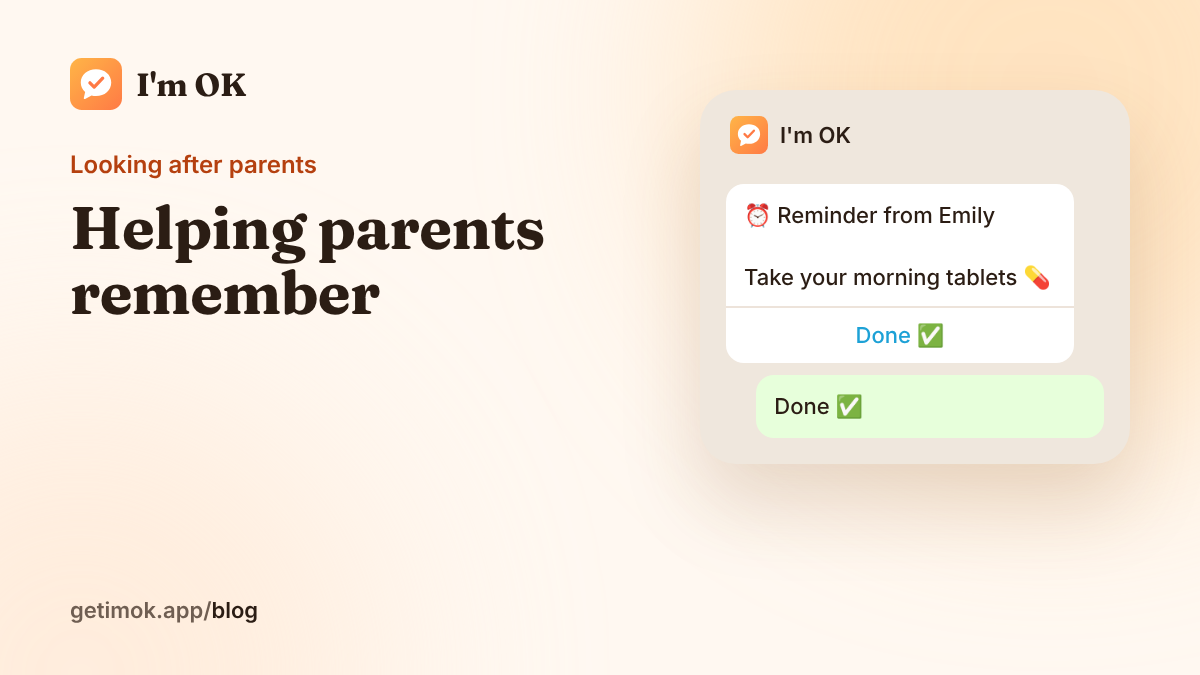
You set a reminder for your mum or dad (what it says and when: once, every day, some days of the week, every month or every year). They get a short message on WhatsApp asking if they'd like it, and say yes once. After that, each reminder arrives on their WhatsApp with a Done button. When they tap it, you can see it on your page. If they don't, I'm OK lets you know, so you can give them a call.
There's no app to download for either of you. It works on any phone with WhatsApp, and they can stop a reminder whenever they like. On the free plan you can remind up to two people. The paid plan, Plus, adds a message every time something is done and a gentle nudge if they forget.
It isn't the right tool for everyone. If your parent doesn't use WhatsApp, or their memory problems are significant, a paper chart, an automatic pill dispenser or care visits timed with their medicines may suit them better. Speak to their GP, pharmacist or a local carers' service about what's available.
Related guides
- How to set reminders on WhatsApp, for you and for someone else
- Living alone safely: a practical guide
Questions people ask
How can I remind my elderly mother to take her medication?
Combine a simple aid with a personal reminder. A pill organiser shows at a glance whether today's dose is gone, and a message or call at a regular time (with breakfast, for example) prompts her to take it. Ask her pharmacist which aids suit her medicines.
What is the best way to remind an elderly person of appointments?
Keep one shared list of appointments and remind them twice: the day before, so they can plan transport and find any letters, and an hour or two before they need to leave. Agree in advance who in the family is going with them.
Are pill organisers suitable for all medicines?
No. Some medicines need to stay in their original packaging, and some don't keep well once they're out of it. Check with a pharmacist before moving tablets into an organiser. They may be able to supply medicines in a suitable pack.
How do I help my parent without taking over?
Ask what they'd like help with and let them choose. Talk about the task (the tablets, the bins) rather than their memory, and keep them in charge of their own routine. Reminders should support their independence, not replace it.
What if my parent keeps refusing their medication?
Don't force it, and never give medicine without their consent. Try to find out why: side effects, difficulty swallowing or confusion about what each tablet is for are common reasons. Talk to their GP or pharmacist, who may be able to suggest alternatives.