Living alone safely: a practical guide
Simple things to set up when you live alone, so someone would notice if something went wrong, without giving up any of the freedom you moved out for.
On this page
Living alone is great. Your space, your rules, your fridge. The one thing it doesn't come with is someone who would notice if you didn't come home, or didn't get up one morning.
Most of the time that never matters. But a little planning means that if something did go wrong (a bad fall, a sudden illness, getting stuck somewhere), someone would know quickly and could help. None of it means being watched or checking in constantly.
This guide covers the few things worth setting up, from who has a spare key to how a daily check-in works.
Who would notice if you went quiet?
This is the most useful question to ask yourself. If you didn't answer messages for a day or two, who would realise, and how long would it take?
For many people living alone the honest answer is "not for a while". That's the gap worth closing. There are a few ways to do it:
A regular call
A friend or relative you speak to at roughly the same time each day. Lovely, but easy to drop when life gets busy.
A daily check-in
A short message each day that you answer with one tap. If you don't, someone you chose is told.
A personal alarm
A pendant or wristband that connects you to a 24-hour response centre. Worth considering if falls are a real risk.
Neighbours
Someone nearby who would notice the curtains staying closed or post piling up. Old-fashioned, and it works.
You don't need all of these. Most people are well covered by one reliable daily signal plus a neighbour or friend who could get in.
How a daily check-in works
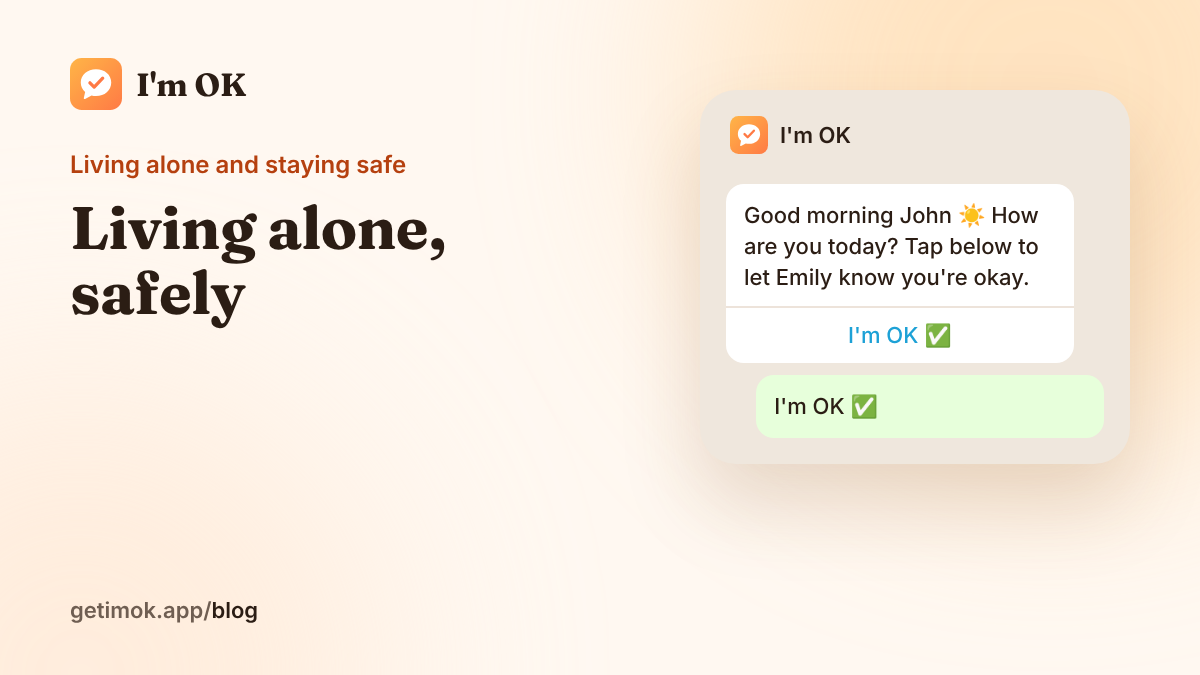
A daily check-in is the simplest way to make sure someone would notice. The idea:
- Once a day, at a time you choose, you get a message. Many people pick the morning, or the time they usually get home.
- You tap one button to say you're OK. That's it. No conversation needed.
- If you don't reply, someone you chose is told. A friend, a sibling, a parent. They can call you or pop round.
The important part is the third step. On good days (which is nearly all of them) nothing happens and nobody is bothered. You only hear from anyone if something might be wrong.
I'm OK includes a daily check-in like this, called the daily I'm OK, alongside its reminders. It runs on WhatsApp, so there's nothing to install. You choose the time and who's told if you miss it.
Your phone: the most important safety tool you own
When something goes wrong, your phone is usually how you get help. A few minutes of setup makes it far more useful:
- Keep it charged and nearby, especially at night. A cheap charger by the bed helps.
- Set up emergency information. iPhones have a Medical ID in the Health app and Android phones have emergency information in settings. Both can show your emergency contacts and key medical details from the lock screen, so paramedics can see them.
- Save emergency contacts clearly, for example as "ICE Mum" (in case of emergency).
- Learn the numbers: 999 in an emergency, NHS 111 for urgent medical advice, 101 for non-emergency police.
Getting in, if they need to
If someone needs to check on you and can't get in, help is delayed. Two simple fixes:
- A spare key with someone you trust, ideally someone who lives nearby.
- A key safe (a small combination lock box fixed outside) if there's nobody close. Share the code only with people who might need it.
Safety at home
Living alone means there's no one else to notice a smell of smoke or a problem with the boiler. Some basics:
| What | How often | Why |
|---|---|---|
| Test smoke alarms | Once a month | Press the button until it beeps. GOV.UK advises testing them monthly (GOV.UK) |
| Carbon monoxide alarm | Test monthly, replace as the label says | CO has no smell. You need an alarm near boilers and fires |
| Boiler and gas appliances | Yearly service | Keeps them safe and working |
| Door and window locks | Check when you move in | Change the locks if you don't know who has old keys |
Your energy supplier also runs a free Priority Services Register. If you're eligible (for example, over state pension age, living with a long-term condition, or after a recent hospital stay), it gives you advance notice of planned power cuts, priority support in an emergency, and a password scheme so you can check that a caller is genuinely from the supplier (Ofgem).
Home security matters too. Age UK suggests things like good locks, security lights and timer lights that make the house look occupied when you're out (Age UK).
When you're out and about
Living alone also means nobody is expecting you home. For evenings out, travelling late or meeting someone new:
- Tell someone your plan and roughly when you'll be back.
- Share your live location with a friend for the journey home. WhatsApp and most phones can do this for a set time.
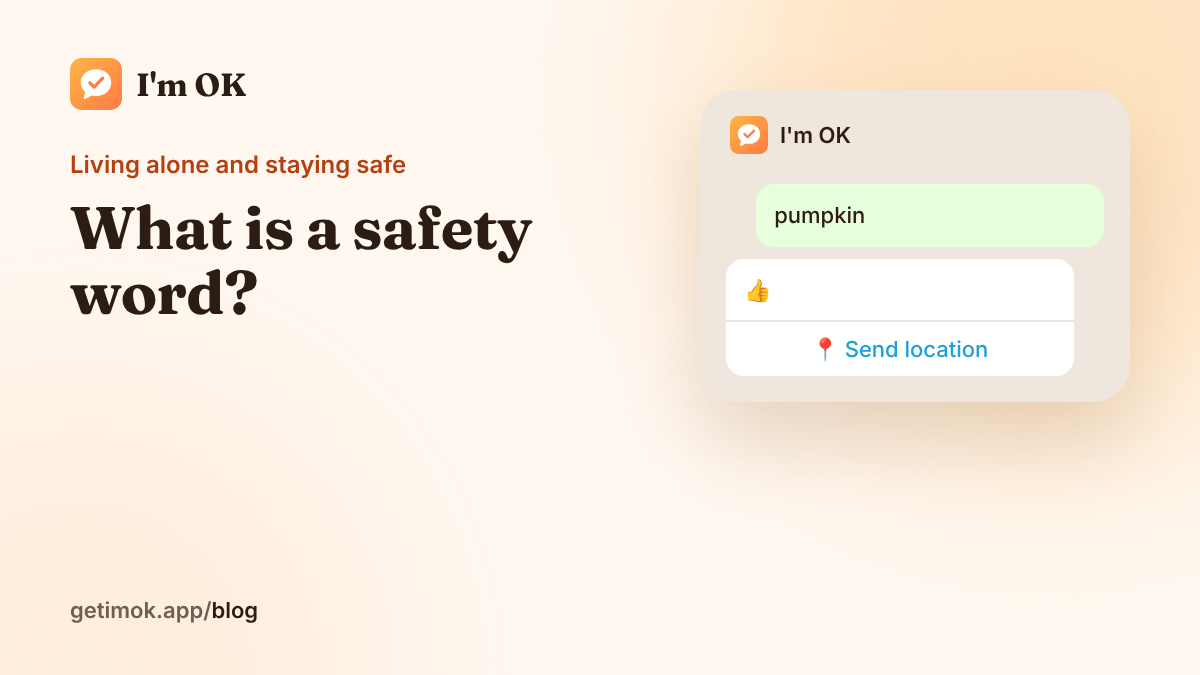
- Agree a safety word. A word you can send to someone that means "I need help, please call or come", without anyone else knowing. I'm OK has a safety word built in: send it to I'm OK on WhatsApp, and the people you chose are alerted straight away with your number and, if you like, where you are.
If you work alone too
Plenty of people who live alone also work alone: carers, cleaners, delivery drivers, estate agents, tradespeople. If that's you, it's worth knowing that employers have duties to lone workers, including keeping in touch with them and having a plan if something goes wrong. The Health and Safety Executive has guidance on what that should look like (HSE).
Even if you're self-employed, the same idea applies: someone should know where you are and when you're expected to finish.
Staying connected
Safety isn't only about emergencies. Living alone can get lonely, especially after a move, a break-up or a bereavement, and feeling isolated affects your health too. Age UK suggests keeping a regular activity outside the home and seeing friends and family often.
Small habits help: a standing weekly call, a class or club, saying yes to invitations even when the sofa is tempting. And if you're struggling, talking to your GP or a charity like Mind is a good first step.
Related guides
- How to help an ageing parent remember the important things
- How to set reminders on WhatsApp, for you and for someone else
Questions people ask
How do I make sure someone knows I'm OK when I live alone?
Set up a daily signal: a regular call, or a daily check-in message you answer with one tap. The key is that if you don't respond, someone you trust is told quickly and knows how to reach you.
What is a daily check-in?
A daily check-in is a short message you get once a day, at a time you choose, that you answer with one tap to say you're fine. If you don't reply, the person you chose gets a message so they can check on you.
Should someone have a spare key to my home?
It's a good idea. If someone needs to check on you and you can't get to the door, a spare key with a trusted neighbour or friend, or a key safe outside, means they can get in quickly.
What is a safety word?
A safety word is a word you agree in advance that means "I need help". You can send it without anyone around you knowing what it means. With I'm OK, sending your safety word on WhatsApp alerts the people you chose straight away.
Is a daily check-in the same as a personal alarm?
No. A personal alarm connects you to a response centre at the press of a button, which suits people at higher risk of falls. A daily check-in is lighter: it makes sure someone notices if you go quiet. Some people use both.
Keep reading
What is a safety word, and how do you use one?
A safety word is a secret word that tells the people you trust you need help, without anyone else knowing. How it works, when to use one, and how to set one up.
Caring for a parent from abroad
Living in a different country from your parents? Practical ways to stay involved, from a local support network and paperwork to daily signs that all is well.
How to remind someone without nagging
How to remind your partner, parent or teenager without sounding like a nag. What makes reminders feel like care rather than criticism, with examples.