What is a safety word, and how do you use one?
A safety word is a secret word that tells the people you trust you need help, without anyone else knowing. How it works, when to use one, and how to set one up.
On this page
A safety word is a secret word, agreed in advance, that tells the people you trust you need help, without anyone around you realising what's happening. You say it, or send it, and they know to act.
Families have used them for years: a word a child can say on the phone to mean "come and get me", or a code a friend can text from a bad date. Today you can also link a safety word to your phone, so sending it alerts several people at once.
This guide explains how safety words work, when they're useful, and how to set one up so it's there if you ever need it.
What a safety word is for
A safety word helps in situations where you can't say "I need help" out loud, or don't want to make a scene:
- A date or meeting that feels wrong. You want a friend to call with an "emergency" so you can leave.
- Walking home late. You're uneasy and want someone to know where you are.
- A party or night out. You've lost your friends and want someone to come and find you.
- Someone is with you. You can't speak freely, but you can type one word.
- Teenagers. A word your child can send to mean "pick me up, no questions asked tonight".
What it isn't: a replacement for 999. If you or someone else is in immediate danger, call the emergency services.
How to choose a good safety word
A good safety word is:
- Unusual. "Help" or "yes" will go off by mistake. "Pineapple" or "blue umbrella" won't.
- Easy to remember under stress. Pick something with meaning to you.
- Easy to type quickly. One or two short words.
- Secret. Only you (and, if it's a shared word, the people who'd receive it) know it.
Agree what happens when it's sent
A safety word is only as useful as what happens next. Agree with your people in advance:
| Question | Example answer |
|---|---|
| What should they do first? | Call me straight away |
| What if I don't answer? | Try again, then call another person on the list |
| Should they come to me? | Yes, if they know where I am |
| When should they call 999? | If they can't reach me and think I'm in danger |
| How do I say it was a mistake? | Message them to say I'm OK |
Keep the plan simple. In the moment, nobody wants to read instructions.
If you can't speak on a 999 call
The police have a system for exactly this. According to the Independent Office for Police Conduct, if you're in danger and can't speak, you can dial 999 from a mobile, listen to the operator, and respond by coughing or tapping if you can. If you're prompted by the automated Silent Solution system, press 55 to be put through to the police.
It's worth knowing that a silent call doesn't automatically bring police to your location, so responding to the prompts matters. If it's safe, speaking, even in a whisper, is the best way to reach someone.
A safety word on your phone
You can keep a safety word just between you and a friend, by text or a call. The drawback: it only reaches one person, and only if they see it.
A safety word linked to a service can alert several people at once, share your number and, if you choose, your location, and look harmless on your screen.
How the I'm OK safety word works
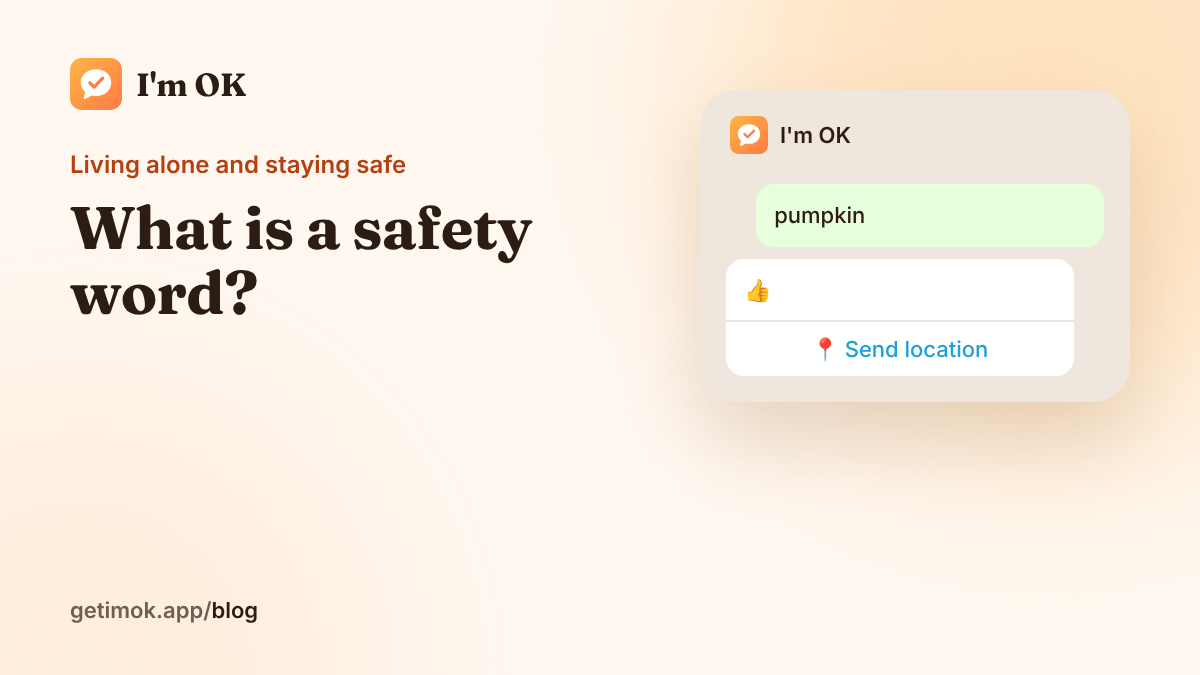
I'm OK includes a safety word, free for everyone. You pick one secret word. If you ever need help, you send it to I'm OK on WhatsApp.
- Your people are alerted straight away. Everyone in your daily I'm OK circle gets a message saying you may need help, with your number to call.
- Your screen stays discreet. You just see "👍", and a button to share where you are if you want to.
- They can say they're on it. When one person taps "I'm on it", the others are told, so nobody is left wondering.
- Sent it by mistake? Reply that you're OK within 2 minutes and I'm OK offers to tell everyone it was a false alarm. After that, message them yourself.
To set one up, you first add someone to your daily I'm OK (the people who would be alerted), then choose your word on your page. Our guide to living alone safely explains how the daily I'm OK works.
Places that feel unsafe
If a particular street, park or underpass makes you feel unsafe, you can tell the police without reporting a crime. StreetSafe, available at police.uk/streetsafe, lets you drop a pin on a map. It isn't for emergencies or reporting crimes, but it helps the police and councils see where people feel unsafe.
Safety words for families
For children and teenagers, a family safety word is a simple way to say "get me out of here" without losing face in front of friends.
- Agree the deal. For many families it's "pick-up, no questions asked tonight; we'll talk tomorrow".
- Keep it secret. Not shared with friends, even best friends.
- Change it if it leaks. Pick a new one if it's ever used as a joke.
If your teenager walks home after dark, a reminder at the time they usually get home ("Text when you're home 🏠") is a gentler everyday check, saving the safety word for when it's really needed. Our guide on how to remind someone without nagging has tips for teenagers.
Questions people ask
What is a safety word?
A secret word agreed in advance that tells the people you trust you need help. To anyone else it means nothing.
What makes a good safety word?
Something unusual that you'd never type by accident, but can remember under stress, like "pineapple" or "blue umbrella".
Is a safety word the same as calling 999?
No. A safety word alerts the people you chose. If you're in danger, call 999. If you can't speak on a 999 call from a mobile, press 55 when prompted.
What happens when I send my I'm OK safety word?
Everyone in your daily I'm OK circle is alerted at once with your number. You see a 👍 and can share your location if you want.
What if I send my safety word by mistake?
With I'm OK, reply that you're OK within 2 minutes and you'll be offered a one-tap way to tell everyone it was a false alarm. After 2 minutes, message your people yourself.
Keep reading
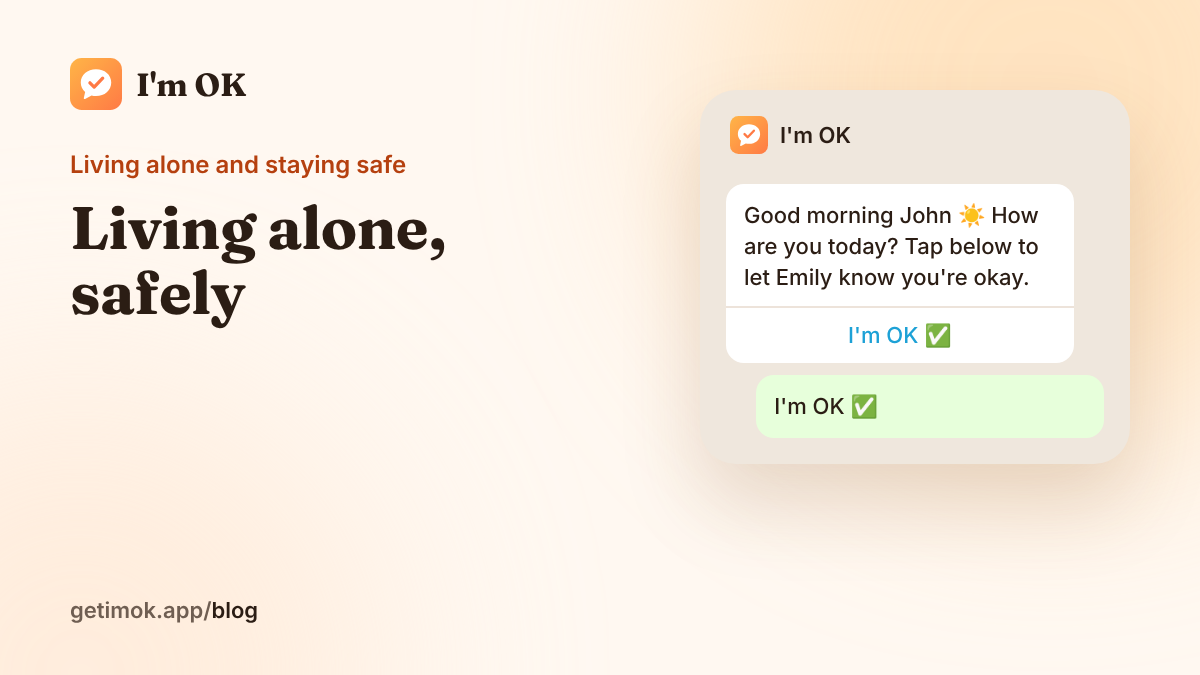
Living alone safely: a practical guide
Simple things to set up when you live alone, so someone would notice if something went wrong, without giving up any of the freedom you moved out for.
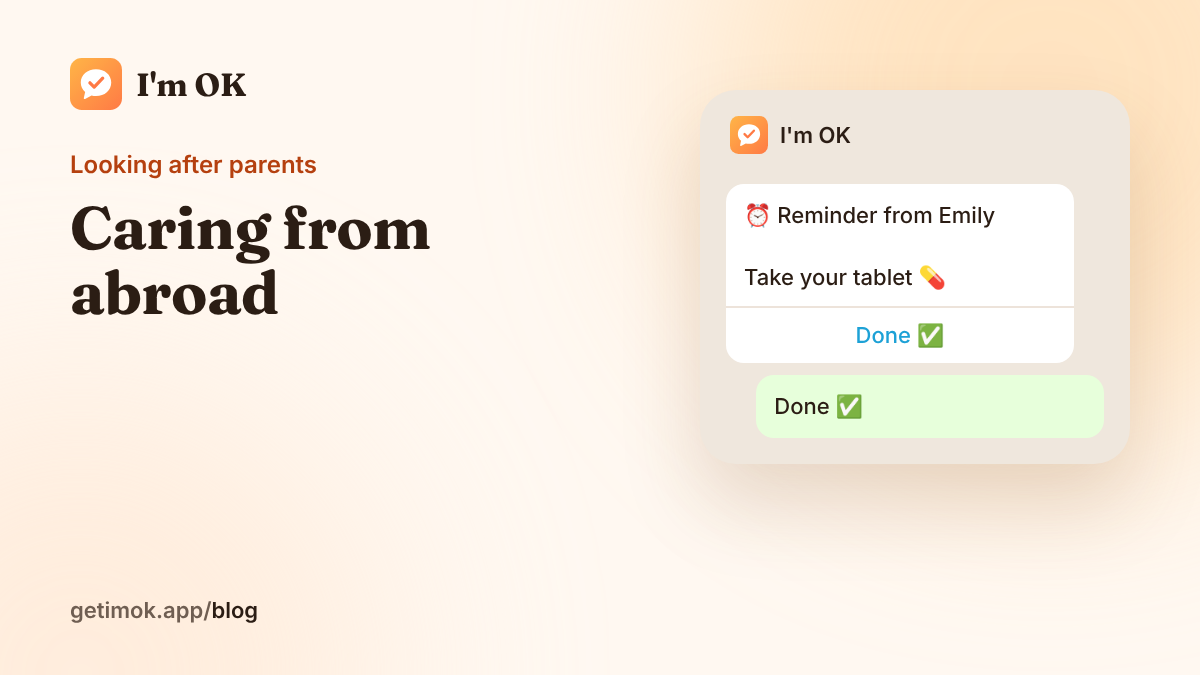
Caring for a parent from abroad
Living in a different country from your parents? Practical ways to stay involved, from a local support network and paperwork to daily signs that all is well.
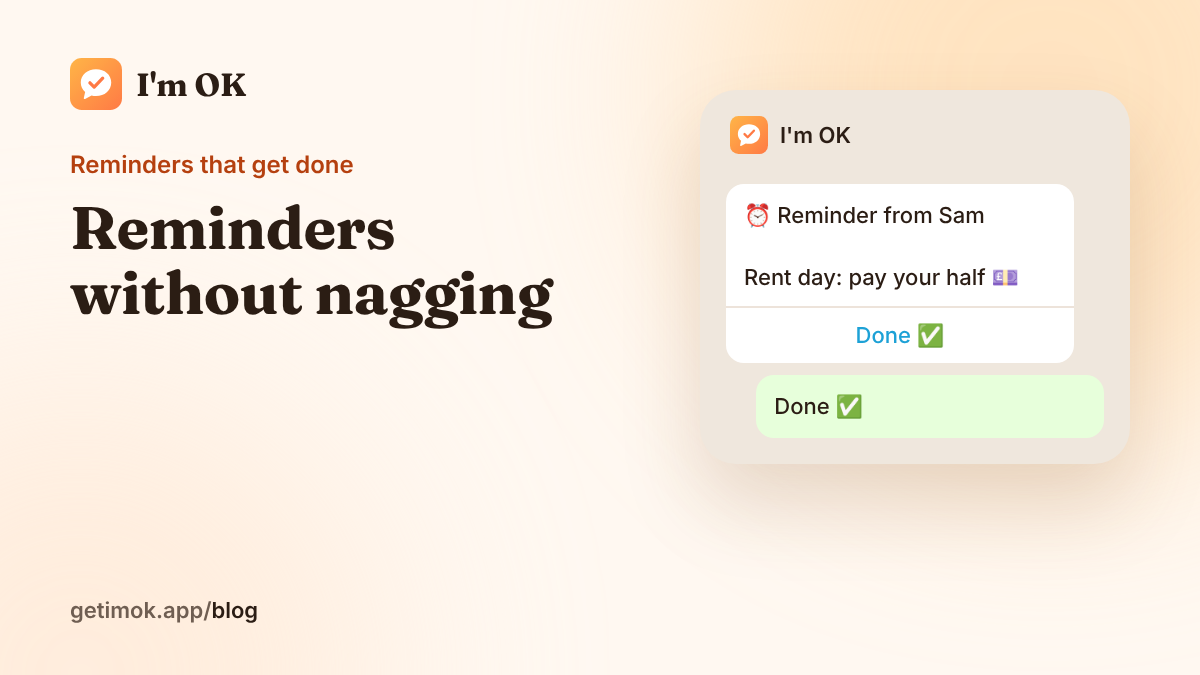
How to remind someone without nagging
How to remind your partner, parent or teenager without sounding like a nag. What makes reminders feel like care rather than criticism, with examples.