How to remind someone without nagging
How to remind your partner, parent or teenager without sounding like a nag. What makes reminders feel like care rather than criticism, with examples.
On this page
"Did you put the bins out?" "Have you taken your tablets?" "Text me when you're home." Most reminders come from love. They just don't always land that way.
Nagging is a reminder that's been repeated so often it starts to sound like criticism. The person reminded hears "you can't be trusted", and the person reminding feels like the only adult in the house. Both end up annoyed about something that was supposed to help.
The good news: it's rarely about what you're asking. It's about how often, when, and who the reminder comes from. This guide covers what turns a reminder into nagging, and how to fix it for partners, parents and teenagers.
Why reminders turn into nagging
A few patterns turn a helpful reminder into an argument:
- Repetition. The first reminder is helpful. The third feels like a lack of trust.
- Bad timing. Reminding someone about the bins at 8am, when they can't do anything about it until tonight.
- Checking up afterwards. "Did you actually do it?" turns a reminder into an inspection.
- Tone. "Don't forget, like last time" carries a history with it.
- Imbalance. When one person always reminds and the other is always reminded, it stops feeling like a partnership.
Notice that most of these are about the follow-up, not the reminder itself.
Agree it once, together
The single biggest change is to agree a reminder in advance rather than delivering it on the spot. "Shall I set a reminder for bin night so neither of us has to think about it?" is a joint decision. "Bins!" shouted up the stairs is not.
Agreeing it together means:
- The other person chose the reminder, so it's theirs, not yours.
- You agree the time, so it arrives when it's useful.
- You agree what happens if it's missed, so there are no surprises.
Remind at the right moment
Timing matters more than wording. A reminder works when the person can act on it straight away.
| Instead of | Try |
|---|---|
| "Don't forget the bins" in the morning | A reminder at 7pm the night before |
| "Have you booked the dentist?" on a Saturday | A reminder on a weekday morning when the surgery is open |
| "Take your tablets" whenever you think of it | The same time every day, tied to breakfast |
| "Text me when you're home" as they leave | A reminder at the time they usually get home |
One reminder, then let it go
This is the hardest part. Send one reminder, then trust the person to act on it. If it really matters, agree in advance what happens if it's missed (for example, you'll give them a call), so you're not left wondering whether to ask again.
Let the reminder come from something else
When you remind someone, it comes with your relationship attached: last week's argument, who does more, the tone of your voice. When a reminder arrives on its own, from a calendar, an app or a service, it's just information.
That's why so many households find reminders work better when they're set up once and sent automatically. Nobody is nagging; the bins just get a mention at 7pm on Tuesday.
Make "done" visible
Most nagging is actually checking. You remind, then you wonder whether it happened, then you ask, and asking is what causes the friction.
If the other person can mark something as done, and you can see it, you never need to ask. They get credit for doing it, and you get peace of mind without checking up on them.
How I'm OK helps
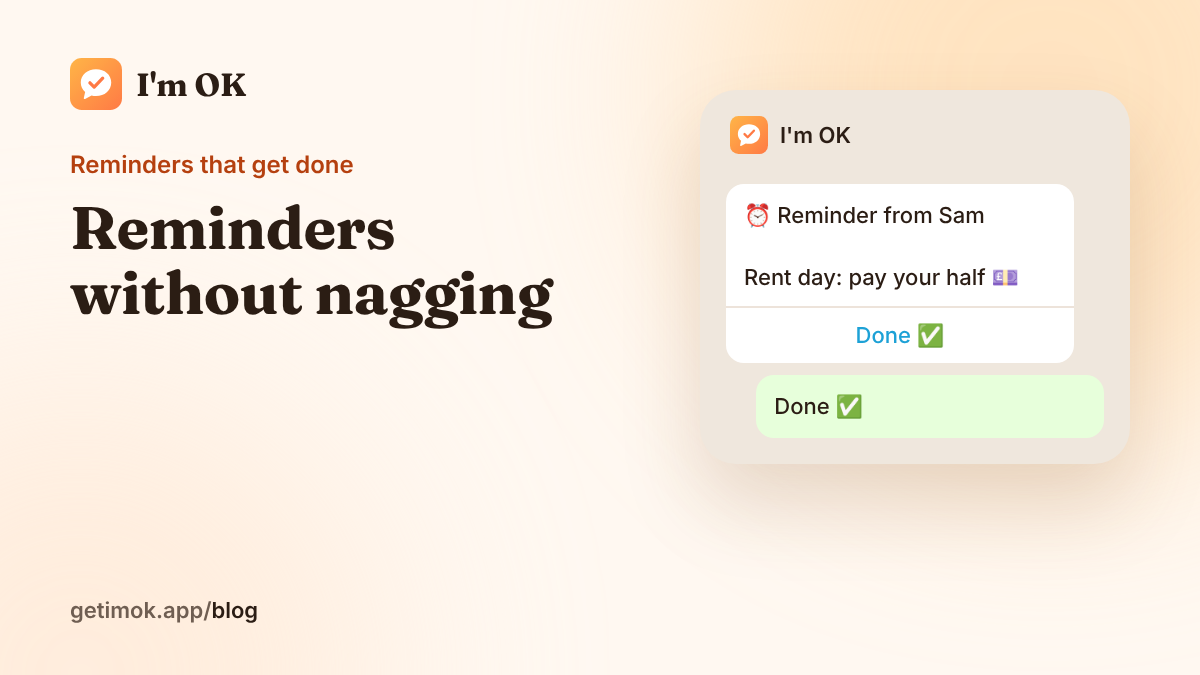
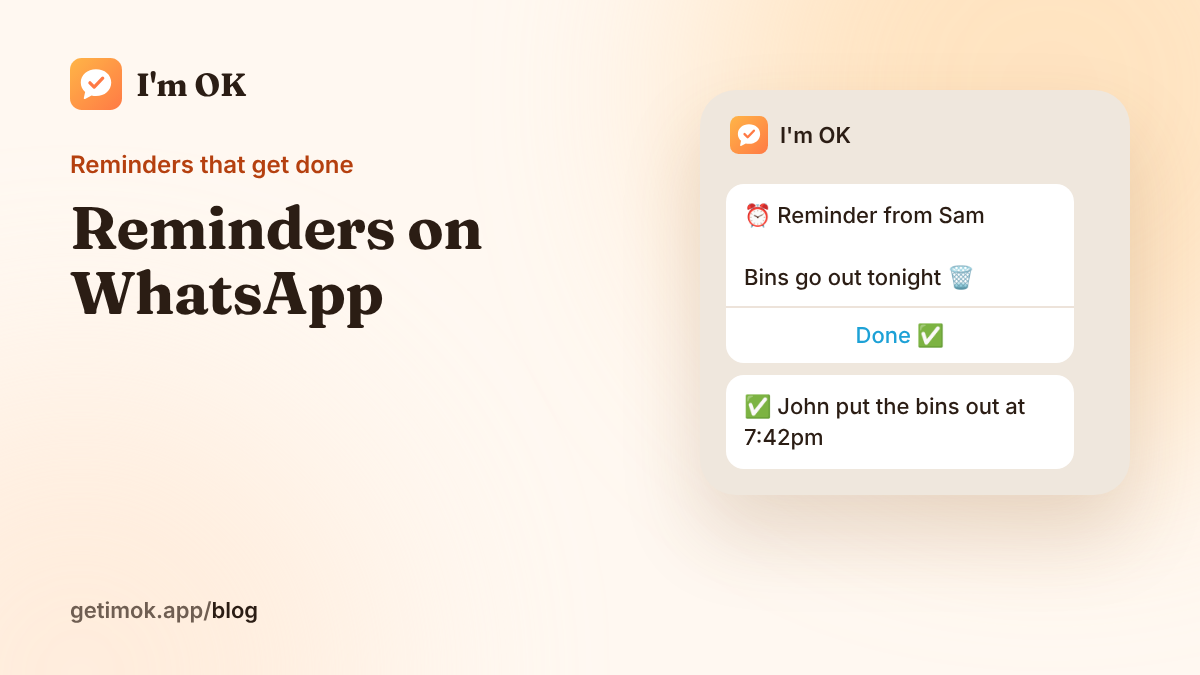
I'm OK sends reminders on WhatsApp to the people you choose, so the reminder comes from I'm OK rather than from you. You set it up in one message, for example "remind Sam every Tuesday at 7pm to put the bins out". Sam says yes once, then gets the reminder each week with a Done button.
When he taps Done, you can see it's done. If he doesn't, you're told, so you only need to say something when it's actually been missed. With Plus, I'm OK can also send him a gentle nudge before you're told, so even that follow-up isn't you.
Partners
For couples, reminders are often a symptom of an uneven split at home. A few things help:
- Share the list, not just the jobs. If only one of you knows what needs doing, that person will always be the reminder. Our guide to shared reminders for couples and flatmates covers writing the list once.
- Each job has one owner. If it's theirs, it's theirs. Resist doing it yourself when they're slow.
- Thank, don't inspect. "Thanks for doing the bins" goes much further than "did you do the bins?".
Parents
Reminding an older parent is delicate, because it can feel like a reversal of roles. Your mum spent years reminding you to do your homework.
- Keep them in charge. Offer the reminder as something that makes life easier, not something you're imposing because you're worried.
- Make it about the task, not their memory. "These new tablets are fiddly to keep track of" lands better than "you keep forgetting".
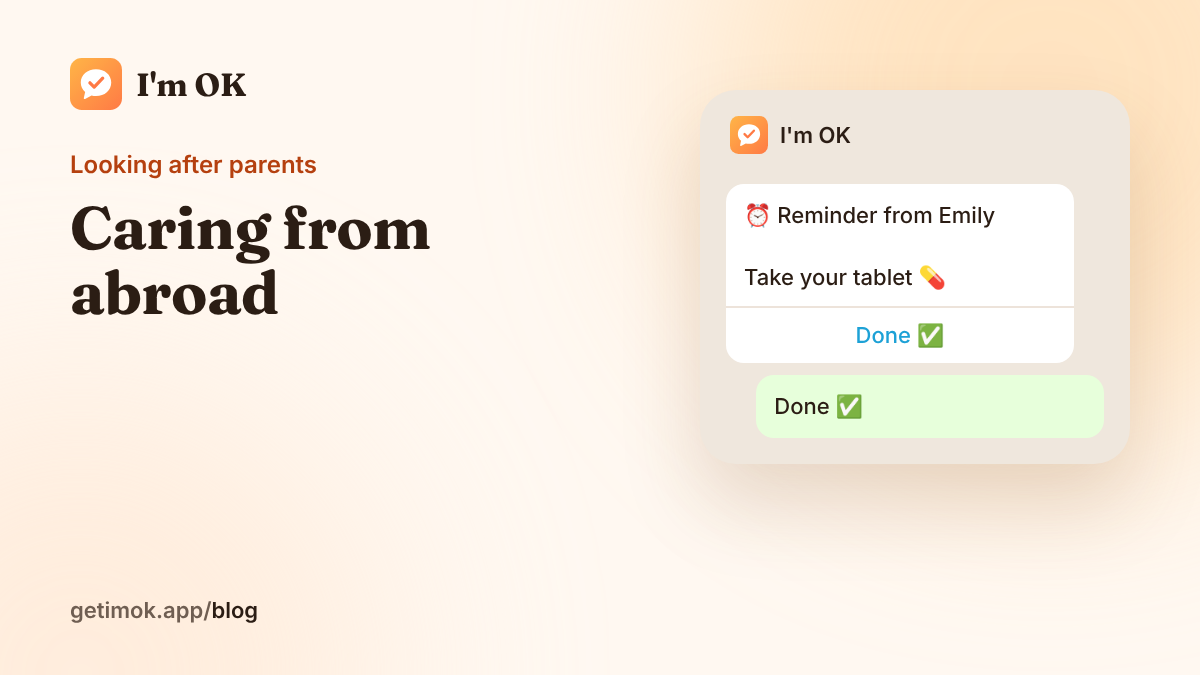
- Don't ring to check. A reminder they can answer means you know it's done without the daily "have you taken your tablets?" call.
Our guide on how to remind an elderly parent to take their medication goes into detail. If you're doing this from a distance, Carers First's guide to caring from a distance suggests agreeing clear boundaries and keeping communication open, which applies to reminders too.
Teenagers
Teenagers are especially sensitive to anything that sounds like being told what to do. The NHS advice on talking to your teenager suggests picking your battles: letting small things go keeps them listening when it matters.
For reminders, that means:
- Agree the few that matter. "Text me when you're home" is one; tidying their room probably isn't.
- Agree the time together. They're more likely to respond to a reminder they helped set.
- One tap to answer. A reminder they can answer with a single tap gets a much better response than "reply when you see this".
Example wording that doesn't sound like nagging
- "Bins out tonight 🗑️" (not "Don't forget the bins AGAIN")
- "Take your morning tablets 💊" (not "Have you taken your tablets yet?")
- "Text when you're home safe 🏠" (not "Why haven't you messaged?")
- "Rent day: pay your half 💷" (not "You still owe me for the rent")
Short, warm and specific. No history, no blame.
For more on the ways to set reminders up, see how to set reminders on WhatsApp, for you and for someone else.
Questions people ask
How do I remind my partner without nagging?
Agree the reminder together once, set it for the right moment, and let it arrive on its own. Don't follow up unless it's actually been missed.
Why does my partner say I nag?
Usually because reminders are repeated, arrive at the wrong time, or are followed by checking. Fewer, better-timed reminders, plus a way to see when it's done, usually fix it.
How do I remind my elderly mum without upsetting her?
Make it about the task rather than her memory, keep her in charge of the routine, and use a reminder she can answer so you don't need to ring and check.
How do I get my teenager to text when they get home?
Agree it together, set a reminder for the time they usually get home, and make answering take one tap. Pick this battle; let smaller ones go.
Is it nagging to set a reminder for someone else?
Not if you agree it with them first. A reminder they chose, arriving at a useful time, is help. Repeating it yourself is what makes it nagging.
Keep reading
How to set reminders on WhatsApp, for you and for someone else
What WhatsApp can and can't do with reminders, the simple ways to remind yourself, and how to send reminders to someone else that they actually act on.
Caring for a parent from abroad
Living in a different country from your parents? Practical ways to stay involved, from a local support network and paperwork to daily signs that all is well.
What is a safety word, and how do you use one?
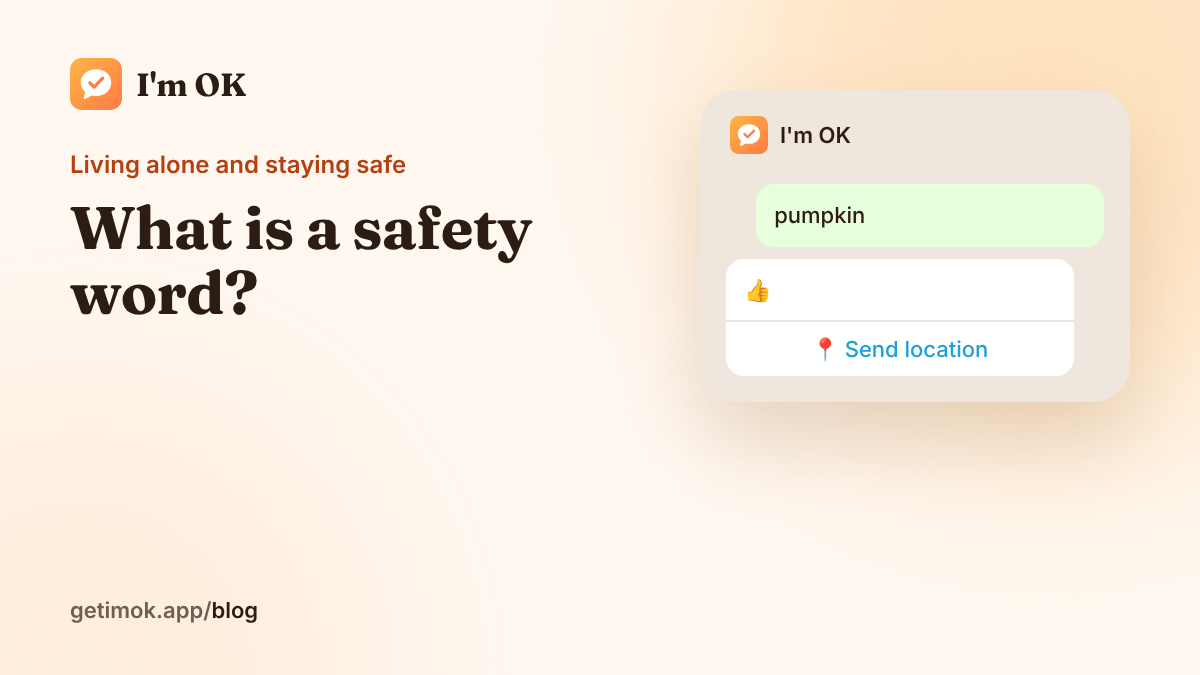
A safety word is a secret word that tells the people you trust you need help, without anyone else knowing. How it works, when to use one, and how to set one up.